Timing is often reduced to surface questions.
Morning or evening.
Weekday or weekend.
These debates sound practical but rarely solve the real problem.
What shapes reader’s response most is not the hour on the clock.
It is the distance between messages.
That distance sets comfort, expectation, and trust long before content quality comes into play.
Many creators sense this without being able to articulate it.
Posting feels uneven even when effort is consistent.
Long breaks create guilt and pressure.
Short bursts create fatigue and regret.
The missing piece is not discipline.
It is awareness of time gaps.
Time since the last send.
Time until the next one.
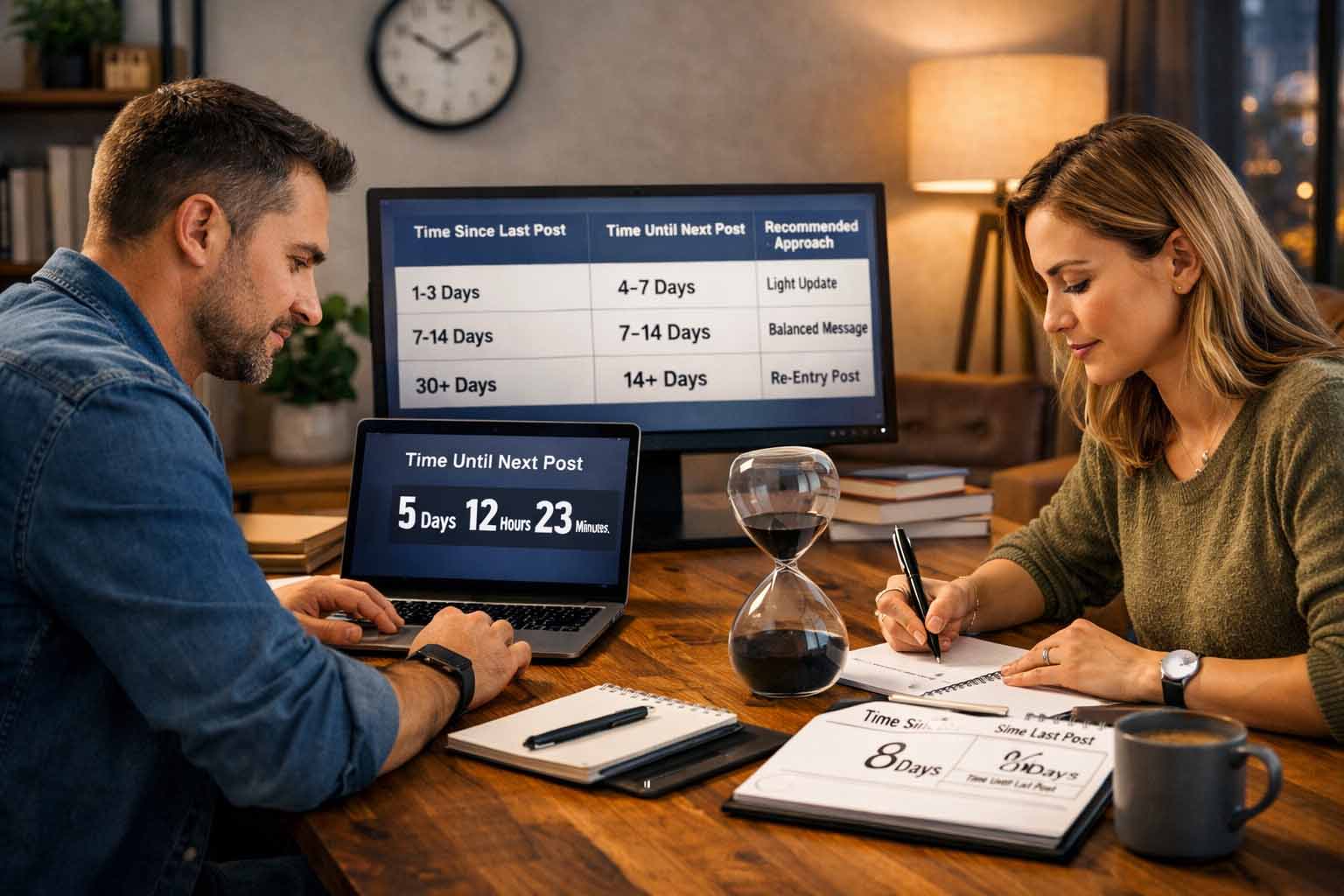
A grounded way to anchor this thinking is with a time until calculator.
It turns vague planning into something measurable.
You see the exact distance between now and your next planned send.
That visibility alone reduces anxiety.
Planning shifts from guessing to responding.
Decisions stop feeling emotional and start feeling obvious.
Timing Summary
This article explains how two simple signals guide publishing rhythm.
Time since the last send reflects audience saturation.
Time until the next send defines pacing and scope.
Together, these signals help maintain consistency without forcing rigid schedules or frantic posting habits.
Why spacing shapes trust more than output volume
Output volume is easy to measure.
Trust is not.
Yet trust is what keeps people opening messages and staying subscribed.
Trust grows when communication feels considered.
Consideration shows up in spacing.
When messages arrive too close together, readers feel crowded.
Attention narrows.
When messages arrive too far apart, context fades.
The relationship cools.
Neither extreme feels intentional.
Steady spacing sends a different signal.
It says the sender is paying attention.
This is visible across platforms.
Understanding what social media actually is helps explain why.
Feeds are not static displays.
They are living streams.
Streams reward rhythm.
Rhythm depends on spacing, not volume.
Time since last send as an emotional cue
Time since is more than a metric.
It sets emotional context.
A message sent two days after the last one feels like a continuation.
A message sent after several weeks feels like a return.
Each lands differently, even if the content is identical.
Short gaps allow assumptions.
Shared context still exists.
You can build forward without restating everything.
Long gaps remove that safety.
Readers need grounding.
Warmth matters more.
Ignoring this difference creates subtle resistance.
Time since also guards against over communication.
It answers a quiet question before you ask it.
Have I spoken recently.
That awareness prevents piling on.
Silence is not failure.
Silence is space.
Time since tells you how much space already exists.
Time until next send as a planning boundary
Time until looks forward rather than back.
It defines how much room remains.
This future awareness acts as a boundary.
Boundaries reduce pressure.
When the next send is close, restraint feels natural.
You focus on one idea.
You avoid cramming.
When the next send is far away, depth feels appropriate.
Exploration feels justified.
The message breathes.
This matters even more when formats mix.
Understanding what live streaming involves highlights the contrast.
Live moments compress attention into narrow windows.
Written messages stretch attention across days.
Time until prevents overlap and overload.
Quiet timing mistakes that weaken attention
Most timing problems are subtle.
They repeat quietly.
Over time they teach readers to disengage without complaint.
- Disappearing for weeks, then posting multiple times in one day.
- Sending newsletters only when urgency spikes.
- Scheduling posts without reviewing recent activity.
- Relying on platform defaults to set cadence.
These patterns feel efficient.
They save planning effort.
Yet they create unstable rhythm.
Unstable rhythm erodes trust.
Timing signals exist to interrupt this cycle before it becomes habit.
A simple framework guided by time awareness
Effective timing does not require complex systems.
It requires consistency in checking two signals.
Time since.
Time until.
Together they form a practical framework.
Creative disciplines already work this way.
The idea appears in how artists use time as a creative tool.
Pauses carry meaning.
Gaps create anticipation.
Publishing follows the same logic when timing is respected.
1
Check time since before writing.
Let the interval shape tone.
Short gaps invite continuity.
Long gaps invite re-orientation.
The opening lines should reflect that distance.
2
Check time until before expanding scope.
Near sends call for focus.
Distant sends allow range.
Scope grows or contracts naturally when time is visible.
3
Fix the next send date immediately.
This anchors the entire process.
Planning stops drifting.
The calendar holds responsibility.
Mental load drops.
Using visual references to spot imbalance early
Visual structure supports clearer thinking.
A simple table makes imbalance obvious.
Patterns appear without interpretation.
Emotion steps aside.
| Time Since Last Send | Time Until Next Send | Directional Signal |
|---|---|---|
| 1 to 3 days | 3 to 7 days | Maintain continuity |
| 7 to 14 days | 7 to 14 days | Balance context and updates |
| 30 days or more | 14 days or more | Re entry with grounding |
Consistency without rigidity
Consistency often gets confused with strict schedules.
In reality, it means reliability.
Timing signals support reliability without pressure.
They adjust as life changes.
This thinking aligns with established principles in email marketing.
Sustainable communication depends on trust.
Trust grows from rhythm.
Rhythm grows from spacing that feels intentional.
Let time carry the memory
Strong systems reduce cognitive load.
When timing lives outside your head, creativity stays lighter.
You show up calmly.
Readers feel respected.
Messages land without friction.
Time since and time until are quiet guides.
They do not force behavior.
They inform it.
Following them builds a rhythm that readers learn to trust over time.