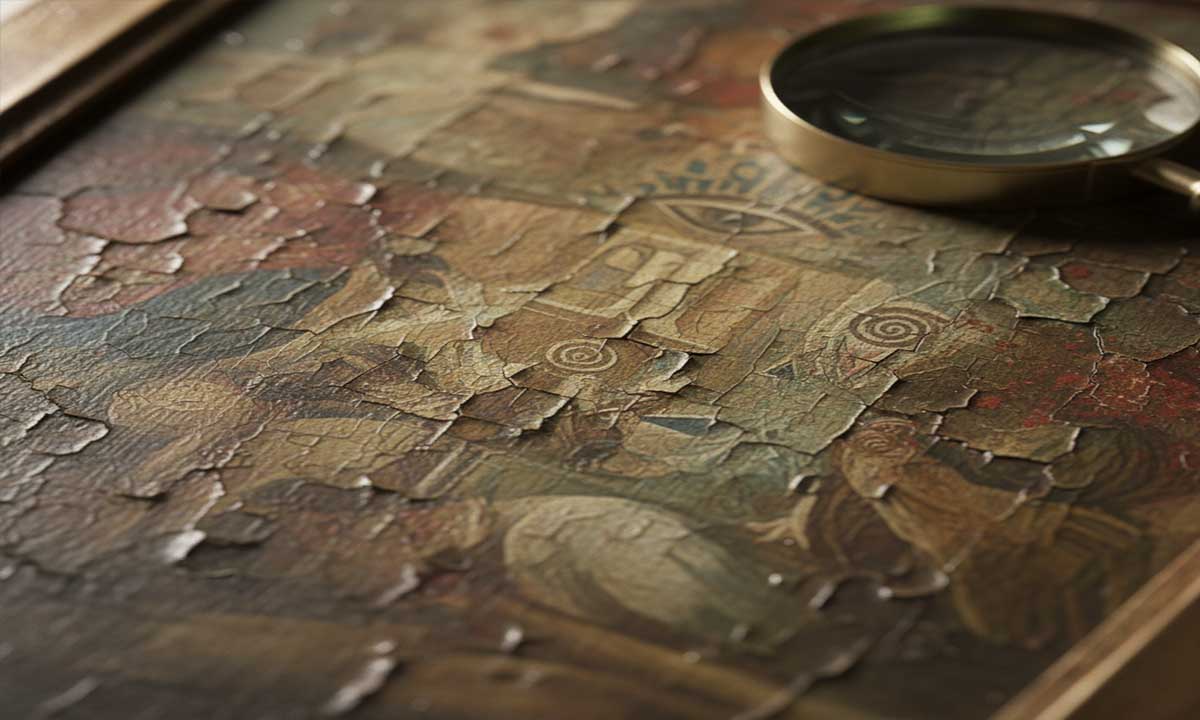
Hidden Narratives Within Historical Art
Art matters because it remains one of humanity’s strongest ways to tell stories. Long before written records became common, creative works already served as windows into earlier eras. Through paintings, sculptures, and objects, people expressed culture, belief systems, and daily life. Yet many stories do not appear right away. Across history, countless artworks carry personal accounts, symbolic messages, or quiet statements that wait patiently for careful viewers. Learning to read these layers builds a richer appreciation of art and offers a clearer view of human history as a whole. It invites thoughtful observation and respect for voices from the past that still speak through masterworks.
At a glance: Historical artworks often carry meanings beyond what appears on the surface. Artists have used symbolism, visual codes, and subtle design choices to express ideas that could not be stated openly.
By studying cultural context, recurring symbols, and technical details, historians uncover messages related to power, belief, identity, and personal struggle. These narratives appear across civilizations, showing a shared human desire to communicate truth through visual form.
Art as a Keeper of Unspoken Meaning
From the earliest cave paintings to monumental sculptures, art has always acted as a shared language. Thousands of years ago, early communities used images to explain their place in the world and their relationship with nature. These works were never only decorative. Often, they recorded belief systems, social structures, and emotional responses to life itself. Many creators chose visual expression precisely because it allowed ideas to be shared without direct speech.
Across different eras, artists worked under social, political, or religious pressure. In such settings, art offered a quiet channel for ideas that could not be voiced openly. A single image might contain social criticism, private grief, devotion, or resistance. Meaning rested in symbols, gestures, color choices, or composition. Those who understood the context could read the message, while others might only see beauty on the surface.
Ancient civilizations understood this well. Roman triumphal arches and imperial statues projected authority and control. Their scale and materials sent clear signals about dominance and permanence. Greek artists, by contrast, often highlighted ideals such as balance, civic duty, and shared governance. Though different in style, both cultures used art to communicate values that shaped society.
Ways Scholars Reveal Deeper Stories
Understanding hidden narratives requires patience and careful study. Art historians examine works much like puzzles. They consider the period, the artist’s background, the intended audience, and the social climate of the time. One major method involves iconography, which focuses on recurring symbols and their cultural meaning.
Color choices also carry weight. In many Western traditions, red has long suggested passion or sacrifice, while blue often reflects spirituality or the heavens. Gold frequently points toward the sacred or eternal. Animals, objects, and gestures follow similar patterns. A lamb may reference innocence or sacrifice, while a skull often reminds viewers of mortality.
Modern technology adds another layer to this research. X-ray imaging, infrared scanning, and pigment analysis allow experts to see beneath the visible surface. These tools have revealed earlier sketches, hidden figures, and changes made during the creative process. Such findings often expose personal struggles, financial limits, or evolving ideas that shaped the final work.
A well-known example appears in Hans Holbein the Younger’s The Ambassadors. At first glance, the painting shows two wealthy men surrounded by symbols of knowledge and status. Yet from a certain angle, a distorted skull becomes visible near the bottom. This visual trick serves as a reminder of human mortality, placed deliberately within a scene of privilege and achievement.
Personal Expression Behind Famous Masterpieces
Some hidden narratives reflect deeply personal views rather than public messages. In the Sistine Chapel ceiling, many scholars observe shapes that resemble elements of human anatomy within Michelangelo’s figures. One section, often associated with the creation of Adam, closely mirrors the form of a human brain. This detail suggests a thoughtful reflection on intellect, creation, and the link between spiritual belief and human thought.
Leonardo da Vinci’s The Last Supper continues to inspire close study. Beyond the expressions and gestures of the figures, the painting relies heavily on geometric balance. The repeated use of three reflects harmony and spiritual unity. Some researchers also point out musical patterns embedded in the composition, a theory supported by Leonardo’s known interest in music and mathematics.
Hidden stories do not exist only in famous paintings. Many appear in ancient objects that surface unexpectedly. Artifacts from the Sanxingdui culture in China include bronze masks with exaggerated features. These objects revealed belief systems and artistic traditions unknown before their discovery. Their sudden appearance reshaped understanding of early Chinese civilization and highlighted how much of human history remains unseen until uncovered.
Art Reflecting Society and Power
Creative works often mirror the social and political climate of their time. Through form and content, artists respond to conflict, injustice, and change. Pablo Picasso’s Guernica stands as a powerful response to the violence of the Spanish Civil War. The fractured figures and stark contrasts convey fear, suffering, and loss. The painting continues to resonate worldwide as a statement against civilian harm during conflict.
Ancient Egyptian monuments provide another clear link between art and authority. The pyramids and the Great Sphinx were designed not only as burial sites but as lasting symbols of divine rule. Their scale and precision reflect a belief in eternal leadership and cosmic order. Temple reliefs reinforced this message by portraying rulers alongside gods, reinforcing legitimacy through imagery.
During the eighteenth and nineteenth centuries, political satire gained popularity through prints and illustrations. Artists like William Hogarth used visual storytelling to critique corruption and moral decline. These works reached broad audiences and shaped public opinion through humor and sharp observation.
In recent decades, contemporary artists have continued this tradition. Ai Weiwei’s installations often address censorship, human rights, and collective identity. His work Sunflower Seeds, composed of millions of hand-crafted porcelain pieces, reflects themes of mass production and individuality. Though simple in appearance, the piece carries layered meaning about society and voice.
Hidden Layers Beneath the Surface
Some narratives remain unseen because they physically lie beneath the artwork. Financial hardship led Vincent van Gogh to paint over earlier canvases. Modern scanning has uncovered portraits and landscapes hidden under visible layers, including figures of farmers and self-portraits. These discoveries reveal both his artistic persistence and the conditions under which he worked.
Such findings remind viewers that art is shaped by real human circumstances. Choices made during creation reflect emotion, necessity, and adaptation. Each layer tells part of a story that extends beyond the finished image.
Why These Stories Still Matter
Recognizing hidden narratives deepens engagement with art. Every line, texture, and form may hold meaning shaped by lived experience. These details connect viewers to people from different times and places, offering insight into shared hopes, fears, and beliefs.
Art becomes a bridge across centuries. It allows present-day audiences to sense emotions that once filled distant lives. By paying attention to what lies beneath the surface, viewers move beyond appearance and into understanding. Through this process, art remains not only beautiful but deeply human, preserving voices that continue to speak across time.